Wednesday, 11 October 2017

Talisman Chapter 10

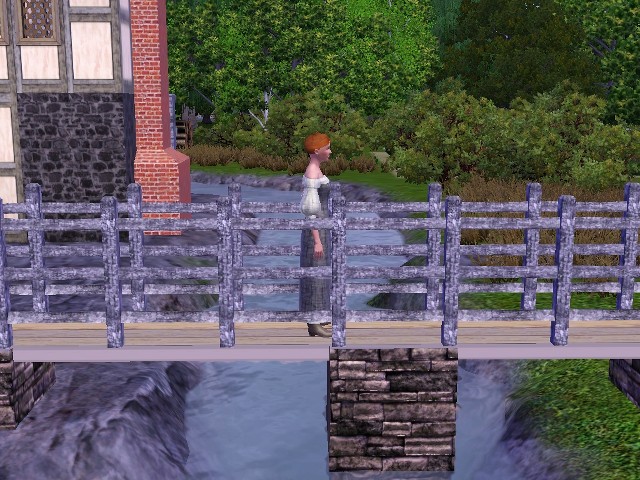
Chapter 10 “Talisman Malherbe? Where are you?” A whiny, moaning voice was calling in the background, but my desire to see the changes that had happened was so great that it pushed this Talisman away from the voice and onto the rickety bridge crossing the moat.
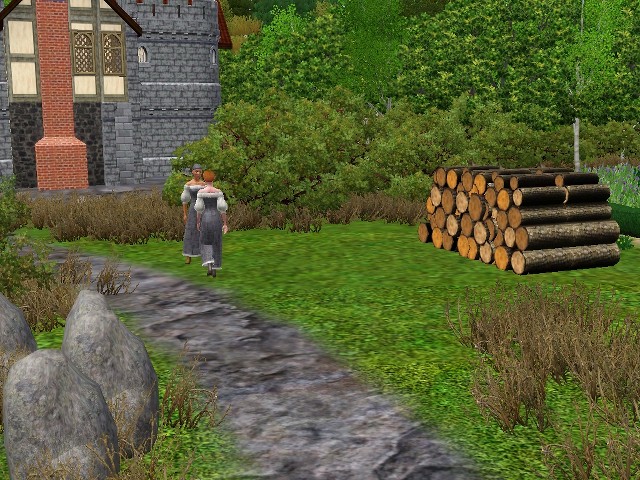
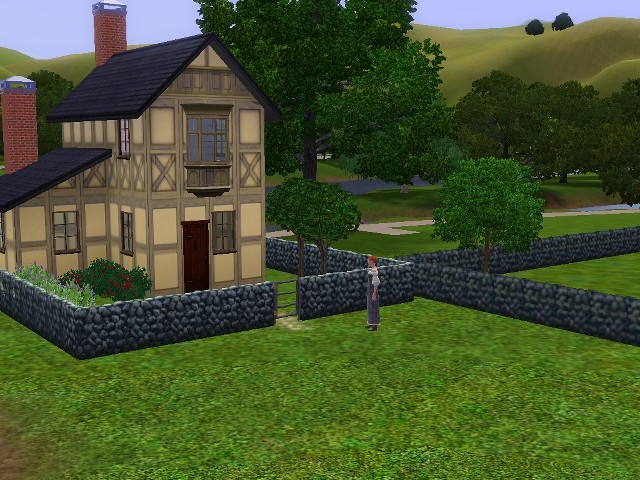
The house had a timber-framed extension built on to the front of it. And I knew who’d done that – this Talisman’s grandfather. And he’d spent a lot of money on it too. But the grounds – the once-productive grounds – they were an overgrown jungle. And this Talisman was a mystery to me as well – she seemed such a negative character.
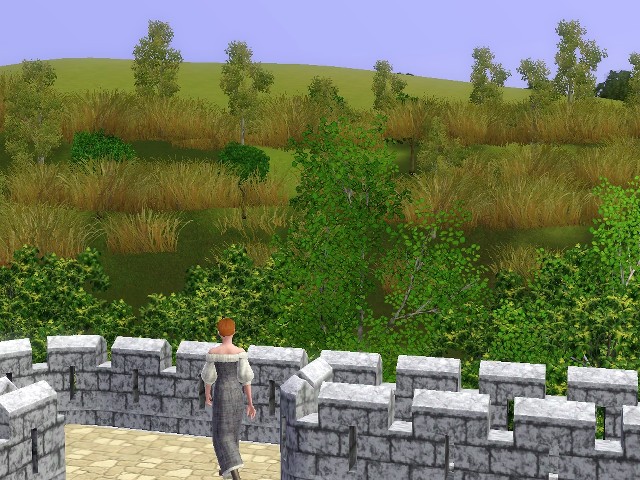
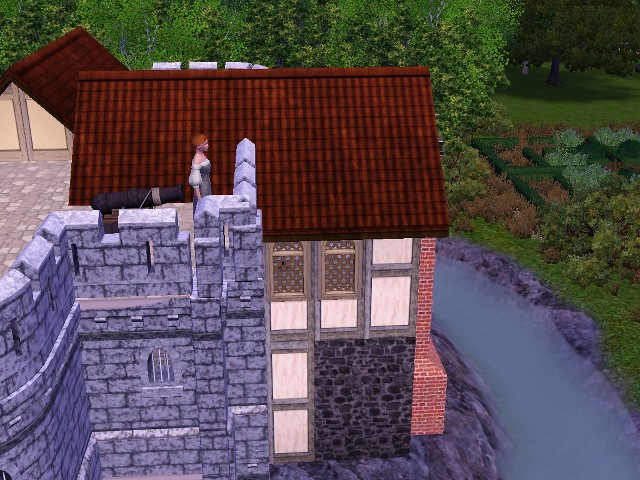
I had to know more. I pushed her up on to the roof of the house. I looked out to the back of the house first. Below me, I should have seen the stables – but there was no sign of them now. No horses? Then how did they manage with no horses? And where there had once been thick woodland, oak, ash and elm, I saw birch trees and scrubby, brambly grass. Where had all the trees gone? But Talisman’s mind provided me with the answer, even as I thought about it. Ship building, of course: first King Henry’s navy and now his daughter Elizabeth’s. The ships that had saved us when the Spanish Armada had threatened our England. A brief flicker of pride warmed Talisman’s heart and then died down again. Cannon! There were cannon on the roof! Were they expecting to defend the house against enemies then? The place looked no better from this side. A seriously overgrown knot-garden, and weeds, brambles and general mess everywhere. And Talisman was so – so hopeless, so defeated.
She was older than me – twenty years old – and she didn’t seem to have any of the guts or determination that the other Talismans had had. Even the 1929 Talisman had been able to pull herself together and stand up to Miss Aislaby in the end. This one was just – well, wet and dejected. The room that had once been the chapel was now larger – and was Talisman’s bedroom. And bed-room was all that it was. The only piece of furniture in it was the bed. And Talisman’s father looked so old! And so worried all the time. It was money; it was always about money. And yet I couldn’t work out why they should be so poor. They owned the lands around the house now instead of holding them from their overlord. There had been four and a half centuries of change. But this Sir Matthew Malherbe shouldn’t be as poor as this. Ship House stood in the middle of good farmland. The rents from the farms should be easily enough to let them live comfortably. I found Talisman’s mother, Damaris, in the kitchen, still complaining fretfully. And as I looked round the room, all that I had learnt from Anna de Malherbe told me that there was not enough food here. I’d already looked downstairs in the cellars (still no sign of a door through to where Ship was), and instead of the rows and rows of barrels full of ale and wine and salted meats and fish, there were just a couple of barrels of salt pork. This family was going to starve to death come the winter if they didn’t get their act together right now! I hadn’t realised how much I’d learnt from my time as Talisman de Malherbe. Up to now, I’d kept my own personality very much in the background, pushing at the Talisman of that time only when I really needed her to do something. It seemed a bit – well, intrusive – to try and take control: and besides, Talisman de Malherbe had been so much more competent at her way of life than I would ever have been. But this Talisman Malherbe needed a boot up her backside! She was drifting around, lost in misery, and making no attempt to change anything. And her parents were no better. I couldn’t help contrasting them with Harry and Sapphire, both of whom would have rolled up their sleeves and started doing something. I drove Talisman outside to check out the knot garden and see if there was anything to salvage there. There was stuff in that knot garden! There were the herbs that Anna de Malherbe had used so well, and there was food! Going to waste! What were they playing at? Never mind the guerdon – whoever had it would probably show up at some point, like they had before – let’s get something done here before we all starved to death. And I didn’t know what would happen to me if the Talisman I was inside died while I was there. And I didn’t know how long I was going to be here either. Best to take no chances. This Talisman went to find some tools so that she could get weeding. I got her to put a bit of backbone into her parents as well.
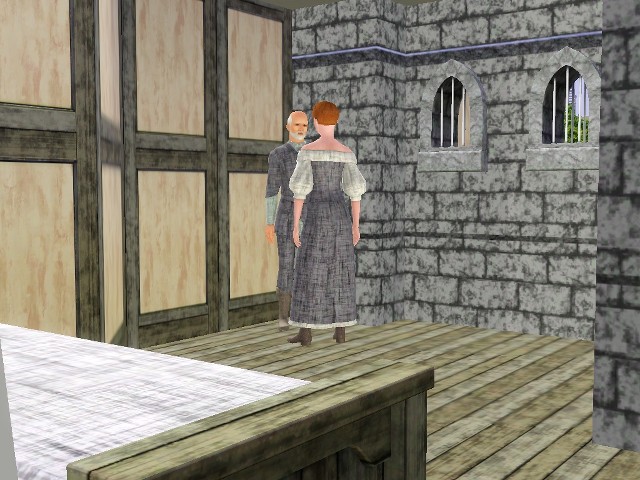
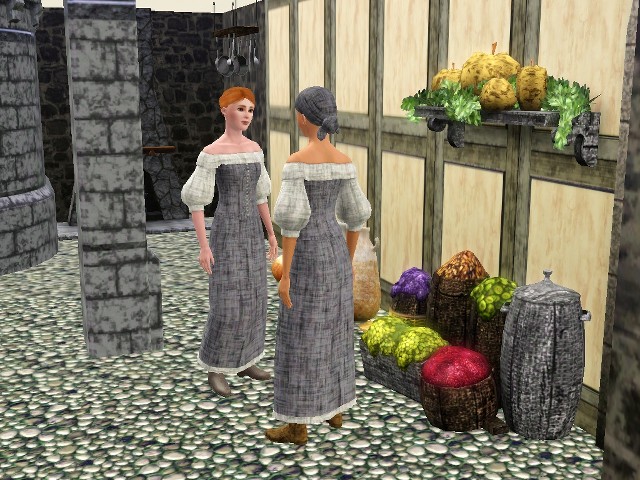
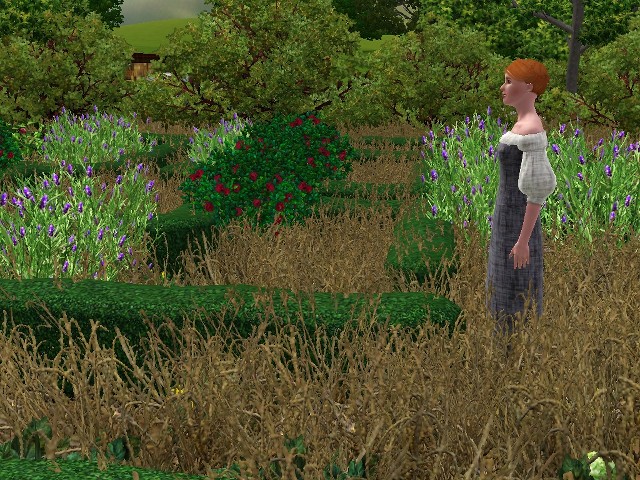
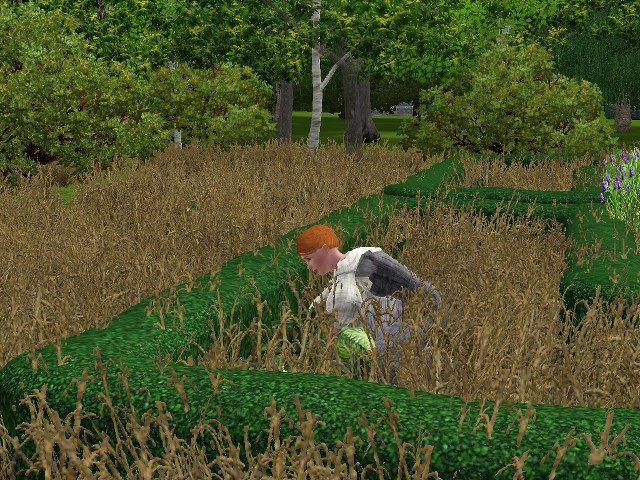
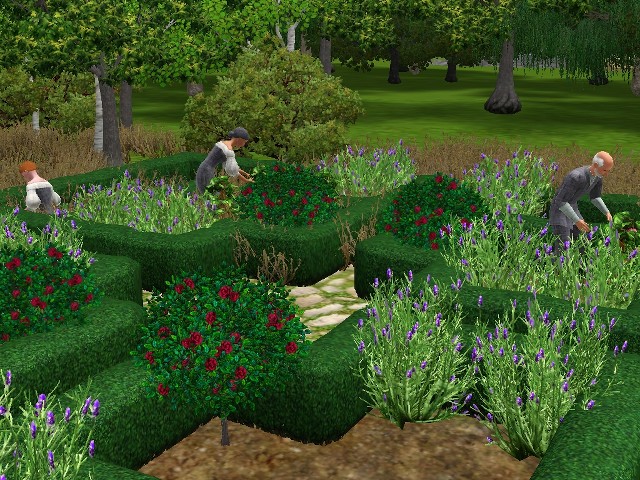
“I’faith, mother, it serves no purpose to say ‘Oh if Hal were but home again.’ He’s gone, and we must shift to do our best without him.” And she pushed her parents into working in the garden too.
It was a dawn-til-dusk race against time , to beat the growing season, to rescue and split enough plants so that we had a faint hope of getting through the winter.
Hal was Talisman’s older brother, and he had left home several years before, refusing to stay and watch things decay around him. They had had a couple of messages, sent via a travelling pedlar. The second had said that he was signing on as third mate on a ship bound for the Indies – and after that one, they had heard nothing. The brambles were cleared, trees were cut down, and a large stack of firewood began to appear. At least they weren’t going to freeze to death come the winter. Oddly enough, the more time they spent outside, the more cheerful the Malherbes became. I had to admit, inside was pretty grim and depressing. And yet it hadn’t seemed so in Anna de Malherbe’s day – it had been clean and sweet-smelling thanks to the herbs she strewed around the place. One thing that had been worrying me – and yet not this Talisman, or her parents – was how the villagers were doing. Anna and Pierre de Malherbe had always been concerned for the well-being of their villeins and serfs. They were their responsibility; the de Malherbes were supposed to look after the people who worked for them. I decided to go down into the village and find out for myself. And I wanted to see what had changed there as well.
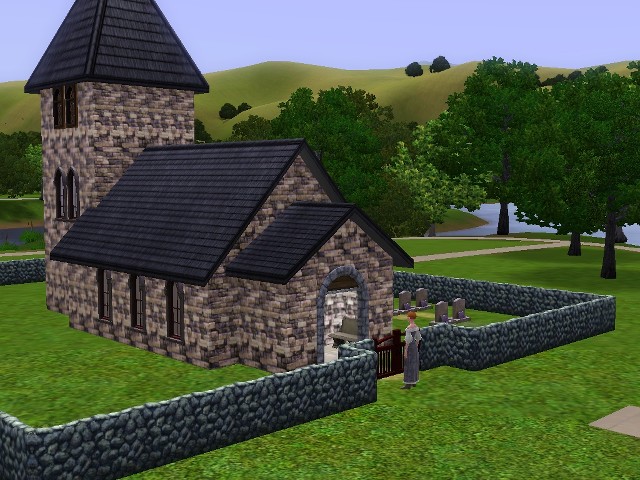
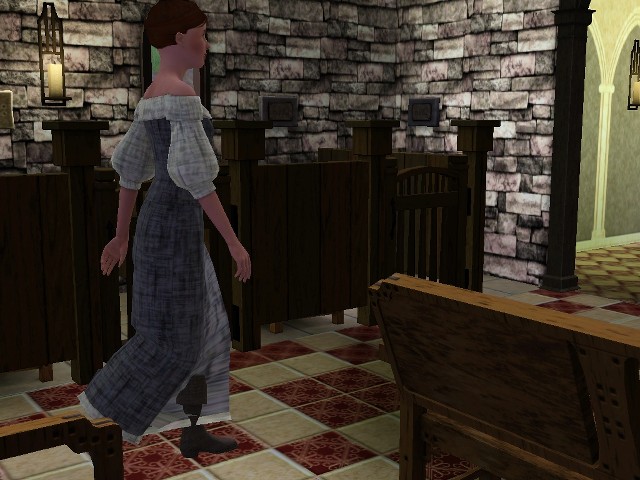
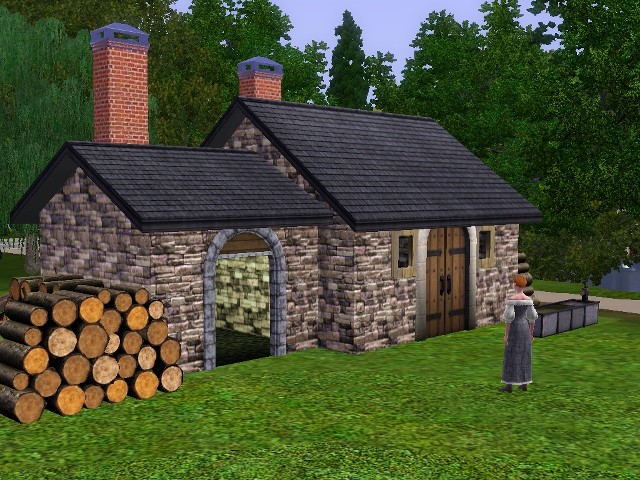
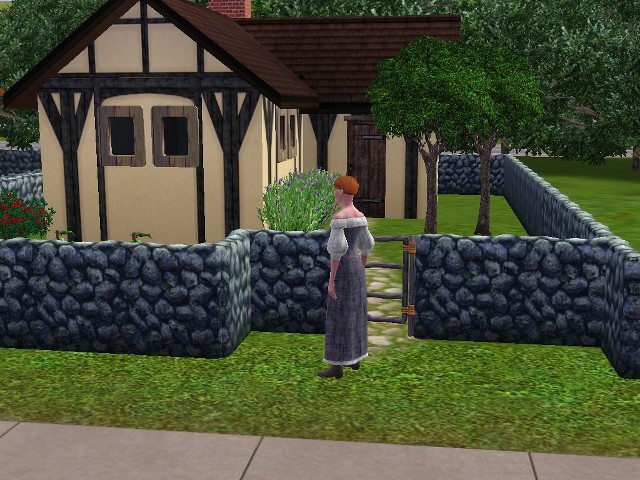
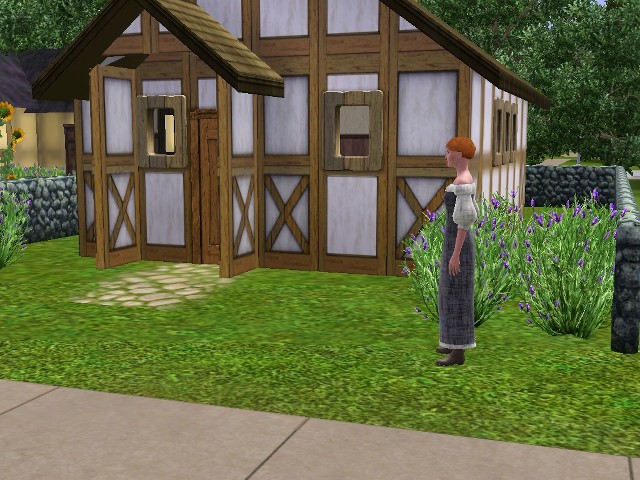
The church was bigger! The tower was taller, and there were bells in the upper part of it. And a porch on the front as well. But there was no sign that Mathilde’s little cottage had ever been there. Talisman went inside, and that was totally changed too! There were pews – some of them boxed in, with little doors to let you in or out, and some of them just plain. The little Norman church I remembered had been empty of seats – people used to bring a folding stool if they wanted to sit down. There was a new chapel on the side of it – but this new chapel was old in Talisman’s reckoning. It was really odd, moving on in time like this. The priest’s house was still in the same place, but the modest little house I remembered had been replaced by a much larger one. The oak of the timbers was still golden with newness. The forge was larger too – the smith obviously didn’t live there any more, for both halves of the building were being used as a workshop, instead of just the smaller half. So maybe things weren’t too bad for the Malherbe villagers. But I still couldn’t understand why Talisman and her parents were so can’t-be-bothered about everything. The first cottage I came to looked clean, sound and prosperous. The garden was well-stocked with plants and herbs. And this one looked fine too. I was beginning to wonder if the village was making itself rich at the expense of Sir Matthew – but that didn’t make sense. He was the one with the power. The farmers here were his tenant farmers. So where were the rents going? At the next cottage, someone came bustling out to greet me. And Talisman knew her – Miller. Mistress Hannah Miller, that’s who this was.
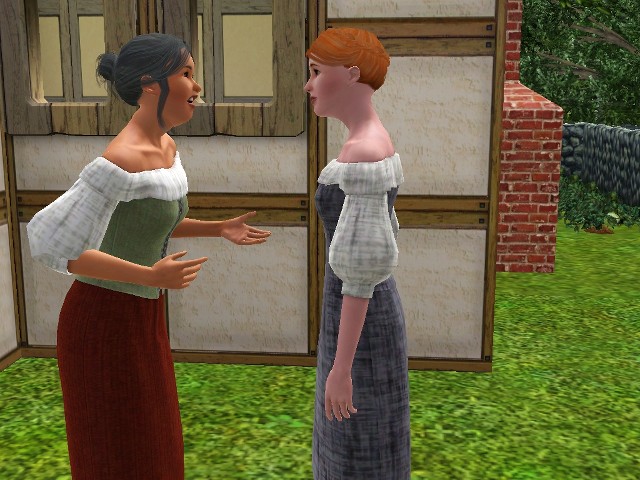
“Oh, Mistress Talisman, it do be good to see a Malherbe here in the village again. There do be so many things as need Sir Matthew’s attention.”
The stuff her clothes were made from was better than Talisman’s. What was wrong here? The words came out of Talisman’s mouth before she realised she was going to say them. And I made her stand still and listen to all that Mistress Miller had to say (which was quite a lot: she was obviously a talkative woman). It had all started to go wrong in Talisman’s grandfather’s day, it seemed. To start with, he had been fiercely opposed to the loss of the Catholic church. He had paid fine after fine for recusancy, and it had been suspected that he hid priests in his house and heard mass in secret there. That explained some of the money troubles they had now, but not all of them.
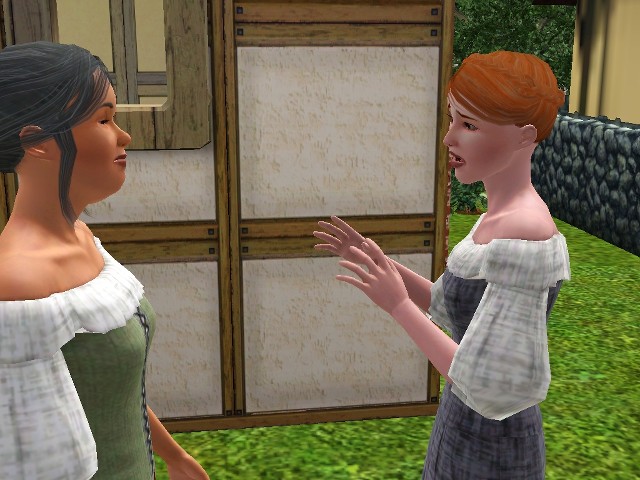
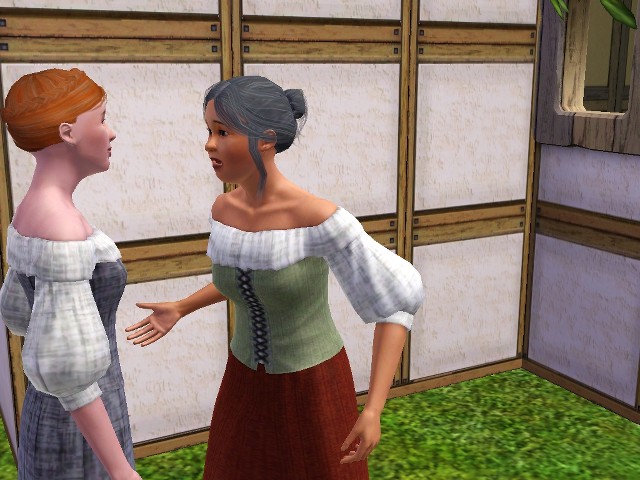
Then he had changed in personality, become grumpy and intolerant, and driven his sons from the house. Talisman’s father had found a job in a near-by city, and worked there until the old man had died. Then he had come home with his wife, and two children, and for a while all had seemed well. “Then what happened?” Talisman asked. This was new to her as well.
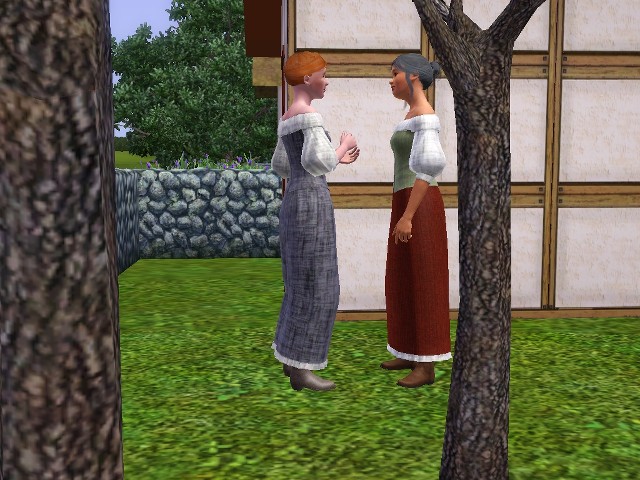
Sir Matthew had just stopped caring about anything. And so had Damaris as well. They weren’t bothering to collect the rents, they weren’t repairing the cottages – in the end, the villagers had to repair their cottages themselves. But what was worrying them was what if Sir Matthew suddenly decided to collect all the back rents at once? The villagers had put some of them aside – but some they’d put into better stock, a new plough. It just wasn’t possible to go on farming without investing in the place.
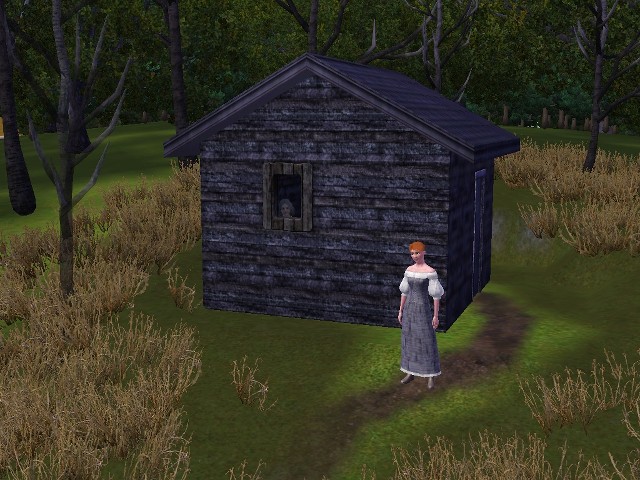
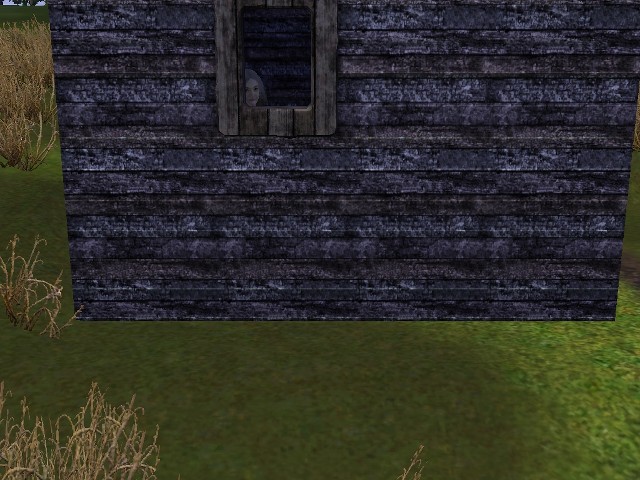
“They do say as a curse were put on the Malherbes. And they do say as old Goodie Fletcher were the one as did it, and only she can lift it. But ‘twould be a brave person as went and asked her what she knew.” Talisman Malherbe would not have described herself as a brave person. But she didn’t have a lot of choice. This Goodie Fletcher sounded like the most likely person to have the guerdon, and I needed to find it. The forest round her house was dark and deep though, and even I was a bit un-nerved by it. The sight of old Goodie Fletcher’s hut didn’t help either. And neither did the face at the window. It didn’t look very welcoming.
Monday, 9 October 2017

The Orphanage Renovacy

Edith Earnshaw-Smythe had had a vision. Childless herself, she had wanted her wealth to be used to provide homes for children without any homes. The orphanages she saw in the cities and towns depressed her – tall, ugly buildings, where the children were called by number rather than name, and no effort was made to get to know then individually. So she bought a parcel of land, in the country, and set about fulfilling her vision. She built a series of cottages on the land, each one designed to house some four or five children, and each house was to have a house-mother. The children would all have an education, but they would all learn as many practical skills as well, which would fit them for life on their own later on. And brothers and sisters were to be kept together, not separated as they were in the large institutions she had visited. They would be encouraged to be self-sufficient as well – there was a vegetable garden, and fishing too. Anything they didn’t eat, they could sell. Jenny Linton was one of the housemothers at the first orphanage Edith built. Widowed at an early age, she still had a heart full of love to give to someone – and she found children who needed that love. By the time she was forty, she was Mother Linton to a dozen children and more, and her grief was no longer so unbearable. When she was sixty, Edith (by now a very old lady!) asked her if she’d go and be head house-mother at the latest orphanage she was building, and Jenny said yes. The last orphanage was, as usual, in beautiful surroundings. But Edith died part-way through its construction, and suddenly money was very tight. The trustees did their best to fulfil Edith’s last wishes, but there was a limit to what they could manage. The other house mothers who came didn’t stay long, and eventually Mother Linton was there with the last four children. It was nearly fifty years since she had gone to the first of Edith’s orphanages, as the junior housemother there, and Jenny was growing old now, and tired. But her heart was still as full of love for the children in her care as it had always been. And every Christmas, and birthday, cards arrived that told her how much her love had been appreciated. The work was beginning to get too much for her – she could no longer manage the vegetable garden, and it had become overgrown with weeds - but she loved the children who were still here, and couldn’t bear to leave them. Nick was the oldest, left to the care of the orphanage with a small legacy “because the children here are happy.” His legacy had helped pay for the major repairs they had had to do after the winter storms one year. Vijay, Hanako and Rose had all been survivors from the wreck of the Sarah Jane in those same winter storms. Only one lifeboat had made it to the shore, and those three children had remained unclaimed by any relatives or friends. The town orphanage at the time had been full, and so they had come to Mother Linton, and been welcomed and cared for. Jenny reckoned, with a bit of luck, that she might last just long enough to see these four through into adulthood, and then the orphanage would just have to close. The income from Edith’s estate just hadn’t kept up with inflation at all, and the place was getting steadily shabbier – though they still kept it as clean as they could. Then Bianca and Paolo arrived. Their uncle handed them over to Jenny, obviously distraught at having to leave them.
“But my sister, she die. First their papa, and now their mama. I am sailor – I can not-a keep them on ship. The captain, he say no. I look in town, but they say they don’t-a keep them together. You keep them together, yes? You don’t-a separate them? To separate twins – that is-a very bad for them.”
The man had been in tears, and Jenny’s heart had ruled her head. The children were lovely – obviously much loved and cared for. They snuggled trustingly into Nick and Jenny’s arms.
“But what are we going to do?” Nick asked. He knew how short they were of money, and he could see how tired Mother Linton was getting these days. “If we send them to the town orphanage, they’ll be separated. Boys one side, girls the other.” Nick had seen the town orphanage once. It was clean, shiny, hygienic – and sterile. Every room was just the same, and it sometimes seemed as though each child was supposed to be just the same as the next one as well. He’d been there just before a meal, and had seen the rows of regimented tables and chairs – all spotlessly clean and shiny, admittedly – and then had seen the children file in, collecting their nutritiously balanced meals from a counter, and sit and eat in uncanny silence. He had compared it to their lively, talkative meals at home, and shuddered inside, and blessed the legacy which had meant he’d been able to stay with Mother Linton. “There’s only one thing for it then,” Nick said with determination. “They’ll have to stay here with us. We’ll all have to help look after them.”
“As long as the inspector doesn’t hear about them. I got their uncle to fill in all the right paperwork, but if the inspector hears about them and comes to look at this place…” Her voice trailed away, and Nick looked around him. It did look pretty shabby, he supposed – but the roofs didn’t leak, and they were all happy here.
“Well then, we’ll have to find some ways of making enough money to spruce this place up a bit,” he said. But Mother Linton had another worry on her mind, besides a possible visit from the inspector. She knew she was getting older – she suddenly felt it. What would happen to the children when she was no longer here? Nick was nearly old enough to make his own way, but Hanako, Rose and Vijay weren’t – though Nick would always look out for them. But now she had Bianca and Paolo to worry about. Nick was sitting helping Rose with her homework, thinking something pretty similar.
“But no matter what happens, I’m going to keep us all together, if I possibly can,” he thought.
A fierce tide of protective love washed over him. He wasn’t going to let Rose, Hanako and Vijay be swallowed up by that vast, impersonal machine that was the town orphanage. This was his family, and it was staying that way! Hanako came and asked Nick if she could do her homework at the table with him.
“It helps me to think better, being near you. Your brain tells mine to work as well.” So they sat there together, in the shabby room, working companionably in the late afternoon, while Mother Linton prepared tea for everyone, and Vijay and Rose kept an eye on Bianca and Paolo.
And afterwards it was another happy mealtime. Mother Linton was busy putting the two little ones to bed, so Nick was in charge of seeing that everyone ate neatly, and took their turn at cleaning up. The talk was all of the two little ones who had just arrived – everyone thought they were very sweet.
“Bianca laughs and laughs if you play peek-a-boo with her,” Rose said.
“And then Paolo laughs too, and he falls over and laughs some more,” Vijay added. Mother Linton had breakfast on the table for them the next morning – Nick thought that she must have got up very early. She was getting the two little ones up, washed, dressed and fed, so Nick made sure that Hanako, Rose and Vijay were also up, washed, dressed in their school uniforms and fed before it was time to leave for school. He could see that having the twins here was going to be a challenge for them all – “but we can do it,” he thought.
The big question was: could they raise enough money to not only keep the bills paid, but also smarten up the place a bit, and keep the inspector from shutting them down?

This is a renovation challenge! The aim is to bring this orphanage up to date, and get it looking good again. Here are the rules.
No money cheats allowed.
You can’t sell what’s on the walls or floors – you have to paper over it, and floor over it. You can sell anything they own or find, or make, catch or grow.
If you want to customise anything that’s already there, you have to pay 25 simoleons for doing it – donate on the mailbox to “spend” the money. If you buy something new, you can customise it any way you want.
On the “Aging” part of the option menu, set the age for Elderly to 8 days.
You can set the ages for the others at any length you like, but I went for 12 days for childhood and 21 for teens.
Mother Linton doesn’t go out to work.
Download the family and building here:
http://www.thesims3.com/assetDetail.html?assetId=5212857

Saturday, 7 October 2017

Talisman Chapter 9

Chapter 9 Once again I made my way downstairs and handed an object over to Perdita. But as she went over to an empty niche with it in her arms, I felt guilty. What had I done to Talisman de Malherbe? What had I done to her life? Had I condemned her to a miserable existence, married to the bullying son of a bullying man? Once again, as soon as Perdita had placed the guerdon in its niche, lights came on and the background noise changed. And now, as I looked around, I saw that there were other changes as well. Slight, but definite. “Ship looks different!”
“Yes. As she regains her power, she can begin healing herself.”
I watched the rainbow colours shift and change on the walls. It was almost like watching a heart beat.
“Oh,” Perdita added. “With this guerdon home, ship will have the power to heat the cold water for you.”
“Hot water? You mean I can have a bath? But how? There’s no boiler, and nothing comes out of the hot taps at all.” “No. Ship can heat the cold water for you as it comes into the house – she’s close enough to the pipes. Knock on the tap several times when you want hot water, and she’ll feel the vibrations. She can’t manage it too often, but every few days should be all right.” A bath! This was too good to be true. This called for a bit of serious cleaning as well. I cleaned that bath until it sparkled – and scrubbed the floor as well: I didn’t fancy putting wet bare feet onto it. The walls would have to wait a little – and I could tell that I’d be re-doing the floor after cleaning the walls! Then I banged on the cold tap several times, turned it on, and after a few moments a slow but steady stream of hot water (oh wow!) came out of it. As I ate my breakfast next morning (Special K! Breakfast cereal!) I was wondering what to do next. Not because I couldn’t think of anything, but because there was so much to do! Finish painting the kitchen? Clean the bathroom walls? Attack the garden some more? Start re-painting and re-covering the chairs? No – first on my list was to find out what had happened to Talisman de Malherbe. What had I done to her? Maybe the Professor would know. After I’d got dressed (and it was so nice to be wearing knickers again!) I went out into the garden to phone home. I got Harry this time, so I told him all about the Norman history I’d been “learning” (and wondered why we’d never done any of this at school. All we ever seemed to do was Hitler and WWII, or the Industrial Revolution).
“And the really interesting thing was how much power and responsibility women had. They often ran great estates while their husbands were away fighting – they had to be really capable and strong.”
Harry laughed. “Well, you’re obviously really enjoying yourself. Do you get to do any cooking at all?”
“No, just prep stuff. And lots and lots of washing up.”
He laughed again, and I hung up, pleased to know that he wasn’t worrying about me. I asked the Professor about Talisman de Malherbe as we were playing chess together. He claimed I was trying to put him off his game, but he went and looked some stuff up for me anyway, and told me about it as we played. It didn’t seem to make much difference to his game – he still played me off the board!
“Talisman de Malherbe. Eldest daughter of Sir Pierre de Malherbe, and his wife Anna. Now, I found out about her through the Longwood Manor records. There’s a mention of a Roger and Talisman Malherbe, who seem to have both lived into their seventies – a great age indeed, back then. They seem to have been a kind of family legend, for they’re mentioned in a letter written some hundred years after their death – here it is…”
He flipped over some pages, and read aloud to me.
“that you may be lyk Talismanne, whose beaute hoole and stidefaste governaunce and gentilnesse did delyten her housbounde Roger all their long yeres of paisible, swete and blissful lyf.”
I looked blankly at him, and he translated.
“She was really beautiful, really kind and they had a very long and very happy marriage. Interestingly, the family seems to have changed their name to Longwood at some point – taken the name of the manor as their own.” It had worked out for her! I was so relieved. And then I remembered what Mathilde had said about Roger’s mother – that she had been a kind and gentle lady – and that Hugo had complained that his son was a milksop. But had I changed her past, or had this always happened? Or had it happened because I’d gone back in time? This was seriously mysterious. And this garden was an appalling mess. Time to do something about a bit of it, at least. One thing I had learnt from Talisman de Malherbe was how to work hard! I missed the company though – and I really missed having parents who loved me. I took to sending Harry and Sapphire silly text messages from time to time, as well as phoning them daily.
I finished the walls in the kitchen, and used an enormous amount of green paint up, painting the chairs, the table-legs, the cupboard, the sink – but I liked it afterwards. And I got Perdita to buy some fabric and re-covered the chairs as well, which mostly involved a hammer and tacks, though there was some sewing too. I painted the windows (that was fiddly) and thought about making curtains, but decided that would be a lot of hand sewing. And all the time, I was wondering where Ship would send me next. I was making the beginnings of a garden. As I weeded, I thought about my experiences so far. Both Miss Aislaby, and Hugo de Malherbe had been – well, weird, I guess, would be one way of putting it. Obviously the guerdon affected people’s personalities quite noticeably. Next time Ship sent me somewhere, I should be able to spot it. But I must ask Perdita how a guerdon could bring luck. And where the one belonging to this house was now, for I had seen nothing like the other guerdons anywhere in the house. I headed off towards the old orchard – I thought I might try clearing away some of the weeds round the few remaining fruit trees. There was a pretty pink flower by the old gate, fighting its way up through the brambles, and I made a mental note to move it to the cleared end of the garden. And then the voices started and everything went black again. I recognised the little circle of standing stones. And the house behind me was familiar in part. But what had happened to everything around me? Where were the tidy, productive gardens? Everything looked so decayed and derelict.